
If you have been dealing with a nagging shoulder during overhead lifts or a recurring ache that surfaces every time you hit mile three on your run, booking a first appointment can feel uncertain. You might worry about being told to stop training, or you may have had past experiences where you felt like just another number in a crowded clinic. At Kinetic Performance and Rehab, the first visit is built differently.
A physical therapy evaluation in Winston Salem at Kinetic Performance and Rehab is not a rushed intake appointment. It is a comprehensive, one-on-one session designed to uncover the root cause of your pain or performance limitation and give you a clear path forward. Whether you are a CrossFit athlete, a runner preparing for a race, or someone recovering from surgery, the evaluation is built around your body, your training history, and your specific goals.
What to Expect During Your First Visit
Every evaluation at Kinetic Performance and Rehab is a full, dedicated session spent entirely with your physical therapist. There are no handoffs to assistants and no rushed timelines. This time is used to understand not just your symptoms, but the full picture of how you move and what you are working toward.
Your therapist will review your medical history and current complaints, but the conversation goes deeper than surface-level symptoms. Expect to discuss your training schedule, upcoming competitions or races, and the specific moments when your movement feels off. This level of detail allows your therapist to connect your pain to your performance demands rather than treating them as separate concerns.
Identifying the Root Cause of Your Limitation
One of the most important goals of the evaluation is identifying why the problem exists, not just what the problem is. At Kinetic Performance and Rehab, this means looking at three interconnected layers.
Current Pain and Injury
Your therapist begins by understanding the primary complaint. When did it start? What makes it worse? How is it affecting your training and daily life? This establishes a clear baseline and helps prioritize where to focus first.
Movement Mechanics
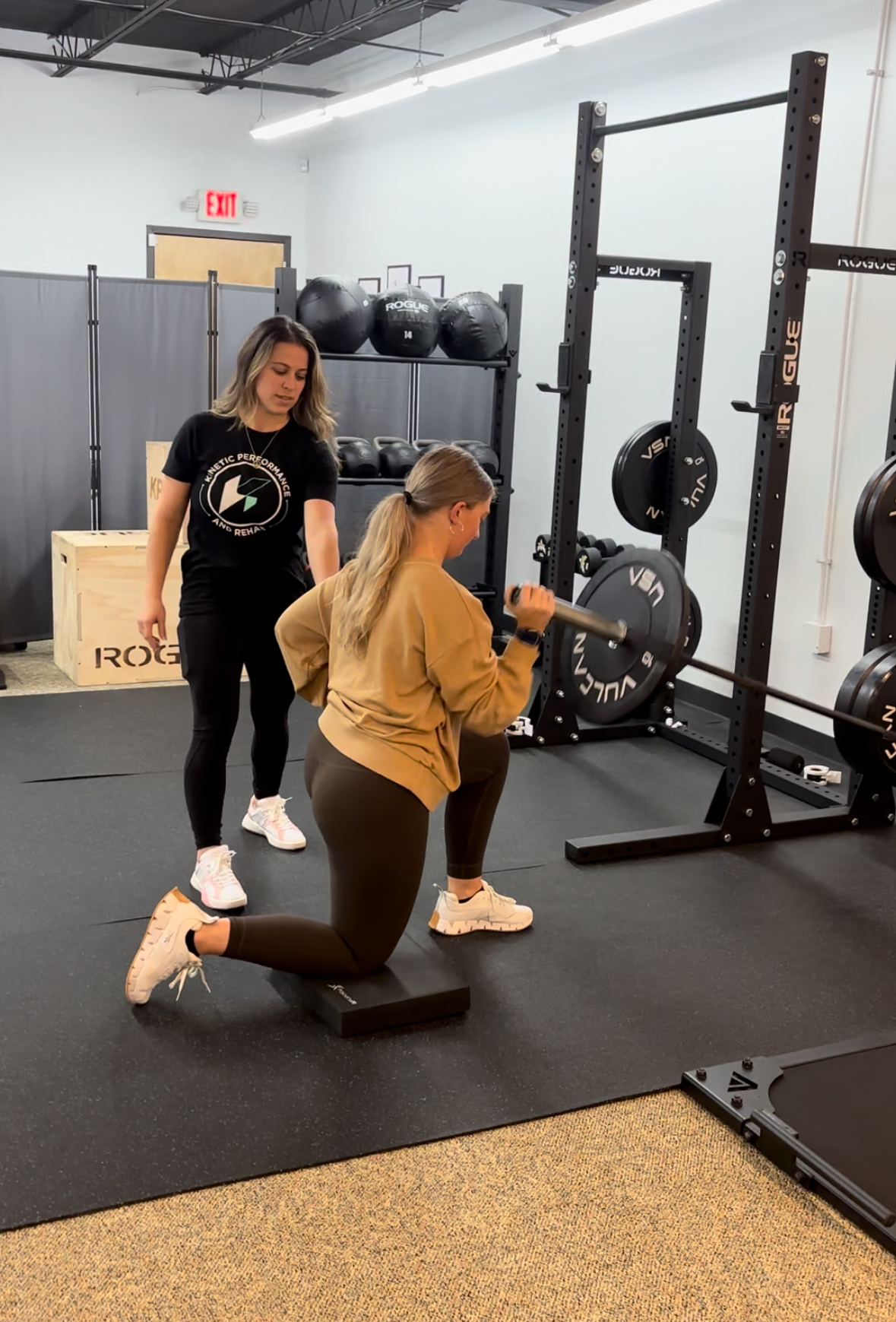
This is where the evaluation goes beyond a standard clinical exam. Your therapist looks for underlying movement dysfunctions, muscular imbalances, and biomechanical inefficiencies that may be contributing to the problem or limiting your performance. A movement screen is used to assess how your body organizes itself under real demands.
History of Past Incidents
Old injuries that were never fully rehabilitated are often the hidden drivers of current pain. Your therapist will explore your injury history to identify patterns and unresolved issues that may be compounding your present limitation.
Sport-Specific Movement Assessment
Once your history is established, the evaluation moves into active testing. At Kinetic Performance and Rehab, this means watching you move in ways that reflect your actual sport or activity, not just standard clinical range-of-motion tests.
- For CrossFit athletes, this may include assessing overhead squat or pressing patterns to identify where mobility or stability breaks down under load.
- For runners, a running gait analysis or running form assessment is used to pinpoint asymmetries, compensations, or high-stress movement patterns.
- For golfers, movement screens are used to evaluate the stability and rotational mechanics behind your swing.
- For athletes preparing to return after surgery or injury, return-to-sport testing helps establish a clear, objective picture of readiness.
This sport-specific approach ensures that the findings from your evaluation are directly relevant to the demands you place on your body.
Manual Therapy During the Evaluation
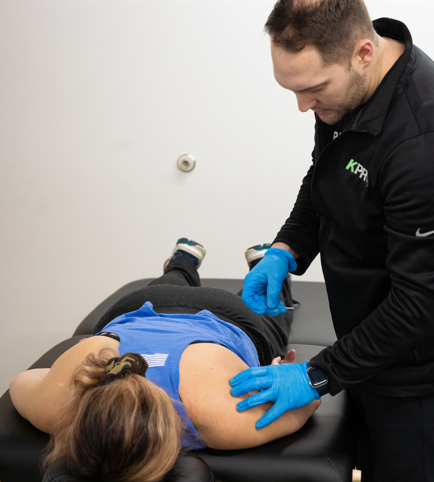
At Kinetic Performance and Rehab, the evaluation is not limited to assessment. Manual therapy is integrated into the first visit to begin improving movement quality and providing relief right away.
Depending on your presentation, your therapist may use techniques such as:
- Dry needling to release stubborn trigger points and reduce muscular tension
- Joint mobilization or manipulation to restore range of motion in restricted segments
- Myofascial release and soft tissue mobilization to improve tissue extensibility and blood flow
- IASTM (instrument-assisted soft tissue mobilization) to address areas of scar tissue or chronic tightness
- Trigger point therapy to address localized areas of muscular dysfunction
These hands-on techniques are not just about short-term relief. They create a window of improved mobility that allows corrective exercises to be performed more effectively from the very first session.
Building Your Personalized Plan
The final component of your evaluation is developing a strategy that is specific to you. Your therapist will work with you to set clear, performance-driven goals and outline a plan that reflects both your clinical needs and your athletic priorities.
This plan is not a generic protocol. It is built around your timeline, your sport, and what matters most to you. It will typically include a combination of therapeutic exercise, mobility work, and a manual therapy schedule tailored to your recovery stage, whether that is post-surgery rehabilitation, prehab, injury prevention, or a return to full performance.
In most cases, athletes are not told to stop training entirely. Instead, your therapist will help you identify how to modify your programming so you can stay active and continue building strength and mobility while the underlying issue is addressed.
Take the First Step Toward Moving and Performing Better
A physical therapy evaluation in Winston Salem at Kinetic Performance and Rehab is designed to give you clarity, a concrete plan, and immediate progress from day one. If you are ready to stop guessing about your pain or performance plateau, schedule your evaluation today and get back to doing what you love.